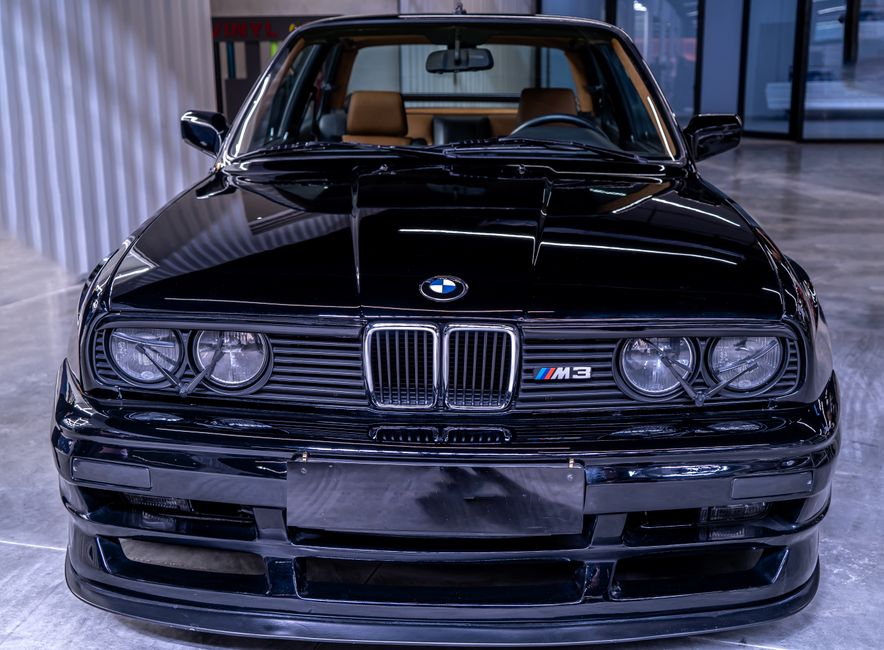
BMW M3 Production End: How It Affects Used Car Values and Long-Term Ownership Costs
With 2027 confirmed as the current BMW M3's final model year, used car values are already beginning to respond to supply scarcity and growing collector interest. Buyers weighing a used M3 purchase now face a shifting market where discontinuation historically drives prices upward while simultaneously complicating long-term parts availability and ownership cost planning.
What Happens When BMW Ends M3 Production
BMW's decision to cap the current-generation M3 at the 2027 model year creates a defined endpoint for new supply entering the market. Once production stops, every M3 that exists is all that will ever exist — at least in this generation's form. That fundamental shift from ongoing production to finite inventory is the engine behind nearly every downstream effect on pricing, demand, and ownership economics.
The current G80-generation M3, launched for 2021, has been one of BMW's most controversial yet commercially successful M cars. Its polarizing styling, competition-grade powertrains, and available xDrive all-wheel drive made it a technical benchmark. When a performance vehicle with that kind of profile hits its production ceiling, the market takes notice quickly.
Production endings don't happen in a vacuum. BMW's broader electrification push is widely understood to be the underlying reason the internal-combustion M3 is winding down in its current form. That context matters for buyers because it signals this isn't a simple refresh cycle — the inline-six turbocharged formula may not return unchanged, which adds cultural weight to the current car's legacy.
How Production Discontinuation Affects Used M3 Values
The relationship between production discontinuation and used car values follows a somewhat predictable arc, though the timeline varies by model. Understanding that arc is critical for anyone considering a purchase now versus waiting.
Will BMW M3 Values Increase After Production Ends?
The short answer is: for well-specified, low-mileage examples, yes — though not uniformly across all M3s on the market. Historical data from comparable performance cars shows that values for the most desirable variants typically stabilize and then rise modestly in the two to five years following the final model year. High-mileage, modified, or accident-history examples tend to separate sharply from clean examples once supply stops growing.
According to data compiled by automotive valuation sources, sports and performance vehicles with defined production endpoints average roughly 8–15% value appreciation over the five years immediately following their discontinuation, assuming the broader used car market remains stable. That figure climbs for low-production variants and factory special editions. The M3 CS, for example, has already demonstrated premium pricing behavior in the current market.
The mechanism here is straightforward: annual new-car sales had been absorbing demand and keeping used prices grounded. Once 2027 production ceases, buyers who want an M3 have only the existing pool to draw from. Supply scarcity affect demand price dynamics directly, and with a nameplate as recognizable as the M3, that demand doesn't disappear — it concentrates.
How Does Discontinuation Affect Car Resale Value?
Discontinuation affects resale value through three primary channels. First, it eliminates the annual depreciation pressure that comes from newer models entering the market and making prior-year cars look dated. Second, it creates collector segmentation — a portion of the buyer pool shifts from enthusiast-driver to collector-investor, which tends to bid up clean examples. Third, it affects financing and insurance treatment over time, as some lenders and insurers begin treating a car differently once it transitions from "current production" to "discontinued."
It's worth noting that not every discontinued car becomes a collector car. The M3's track record across six generations, its motorsport heritage, and its status as a driver's benchmark give it stronger fundamentals for appreciation than a discontinued economy sedan would have. The nameplate carries genuine cultural equity.
Long-Term Ownership Costs for BMW M3 Buyers
Value appreciation potential is only one side of the ownership equation. The other side — ongoing costs — deserves equal attention, particularly because the end of production introduces variables that don't exist when a car is still being actively manufactured.
Buyers can use a car ownership cost calculator to model their full annual expense picture before committing to a purchase, factoring in insurance, financing, fuel, and estimated maintenance against their specific usage profile.
What Are Typical Maintenance Costs for a Used BMW M3?
The M3 has never been an inexpensive car to operate, and that profile doesn't improve with age. Based on industry maintenance data, M3 owners typically spend between $1,200 and $2,400 annually on routine maintenance — oil changes, brake service, tires, and inspection — depending on mileage and whether the work is performed at a BMW dealer or an independent specialist.
Brake wear is notably accelerated on M cars due to their performance-oriented use. High-performance brake pads and rotors can run $600–$1,200 per axle at a dealer. Tires on the M3's wide staggered setup — particularly in Competition trim — cost significantly more than standard passenger car tires, with a full set often exceeding $1,500 installed.
The S58 engine powering the G80 M3 has a generally strong reliability reputation in its first 60,000 miles, but owners should budget for water pump replacement (a known interval item on BMW inline-six engines), cooling system components, and fuel injector service as mileage climbs. These repairs can range from $800 to $2,500 depending on the shop and scope.
Maintenance and Repair Costs Post-Production
This is where BMW M3 discontinuation impact resale value analysis gets more nuanced. Once production ends, parts availability becomes a longer-term concern. BMW typically supports parts supply for discontinued models for 10–15 years post-production, meaning a 2027 M3 buyer should have reasonable parts access through the late 2030s. After that window, supply depends on the aftermarket, salvage market, and third-party manufacturers.
For a car with the M3's enthusiast following, the aftermarket parts ecosystem is robust. Companies that specialize in European performance vehicles have strong incentive to support a model with hundreds of thousands of units in circulation globally. That's a meaningful risk buffer compared to low-volume niche vehicles where parts supply can disappear quickly after production ends.
However, software and electronics are a different story. Modern BMWs are deeply software-integrated, and certain control modules, coding functions, and diagnostic capabilities may become harder to access if BMW restricts or discontinues support for the G80 platform's software ecosystem. Buyers should factor in the potential need for third-party coding tools and independent electronics specialists over the car's long-term ownership horizon.
Insurance costs also warrant attention. As M3s transition into the collector and enthusiast market, specialty agreed-value insurance products become available that may actually reduce annual premiums compared to standard auto policies — particularly for lower-mileage examples stored or driven seasonally. Comparing standard versus specialty coverage options is a worthwhile exercise for any serious M3 buyer.
Investment Potential: Is a Used M3 Worth Buying Now
Framing a used M3 purchase purely as a financial investment is the wrong lens, but investment considerations are legitimate for buyers who plan to hold the car long-term. The question is whether the total cost of ownership — purchase price, financing, insurance, maintenance, and eventual selling costs — nets favorably against the projected resale value in five to ten years.
According to the U.S. Bureau of Transportation Statistics, passenger vehicle ownership costs vary significantly based on vehicle class, usage patterns, and holding period, with performance vehicles often demonstrating more favorable long-term cost profiles when resale value is factored in against depreciation-heavy mainstream vehicles. Buyers can review transportation cost data at bts.gov for broader context on vehicle cost benchmarks.
For the M3 specifically, the strongest investment case applies to: Competition xDrive sedans in desirable colors (particularly rare paint options), CS models with full documentation, and any examples with documented track records or original window stickers. Manual transmission cars — available in base M3 trim — also command premiums in the enthusiast market that are likely to grow once production ends, as the manual M3 represents a configuration that may genuinely disappear in any future M3 incarnation.
Buyers considering a purchase now can model projected purchase and ownership scenarios using an auto cost calculator to compare total cost of ownership across different trim levels, mileage points, and holding periods.
Comparing M3 Values to Other Discontinued Performance Cars
Looking at precedent from other discontinued performance cars provides useful calibration for M3 value expectations. The E46 M3, which ended production in 2006, spent several years depreciating before stabilizing around 2012–2014. Clean, manual, low-mileage examples have since tripled or quadrupled in value in some cases. The F80 generation M3 (2015–2018) is already showing appreciation in premium condition examples.
The Porsche 911 GT3 RS, the Honda S2000, and the Lexus LFA all followed broadly similar trajectories: a post-production dip or plateau followed by meaningful appreciation driven by collector demand and shrinking supply of quality examples. The M3's global sales volume is larger than most of these, which tends to moderate appreciation compared to genuinely limited-production cars — but it also means the parts and support ecosystem remains viable longer.
BMW M performance vehicle depreciation in the immediate post-production period is typically less severe than mainstream vehicle depreciation precisely because the buyer pool skews toward enthusiasts and collectors who are less price-sensitive and more condition-sensitive. That dynamic tends to maintain floor pricing on excellent examples even when broader market conditions soften.
Frequently Asked Questions
Will BMW M3 values increase after production ends?
Clean, low-mileage examples — particularly CS models, manual transmission variants, and rare color combinations — are most likely to appreciate. High-mileage or modified M3s will follow a different trajectory. Appreciation is not guaranteed but is historically supported by comparable discontinued performance cars over a five-to-ten-year window.
Should I buy a used BMW M3 before production ends?
Buyers who intend to drive and enjoy the car have a reasonable case for purchasing before 2027 model year supply exhausts, as the best examples at current prices may represent better value than post-discontinuation pricing. Buyers primarily motivated by short-term investment should approach the purchase cautiously — used performance cars carry real carrying costs that can erode returns if the holding period or timing is wrong.
What are typical maintenance costs for a used BMW M3?
Budget $1,200–$2,400 annually for routine maintenance on a well-kept M3, with higher costs in years requiring brake service, tire replacement, or wear-item repairs. Setting aside an additional $1,000–$1,500 per year as a repair reserve is prudent planning for a high-performance vehicle operating outside its factory warranty period.